my first in-person workshop
Over the past few weeks, I have been focusing on intervention development.
Last week, I conducted my first in-person workshop at Central Saint Martins. The workshop was curated based off this conversation I had last week.
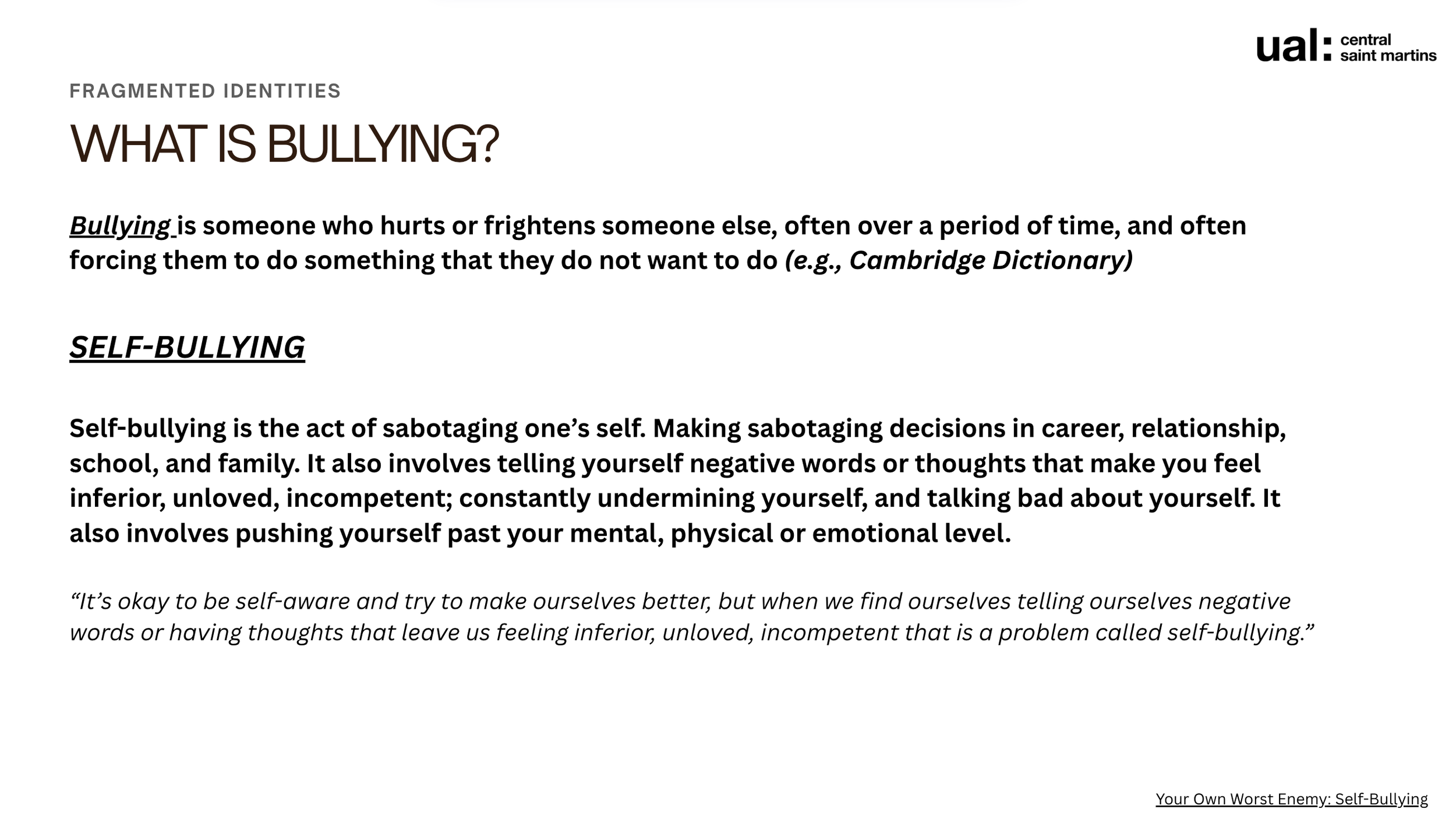
As a Creative Director & Stylist, I am quite critical of my own work and put high expectations on myself. In a conversation I was having, someone said to me, “Pranav stop bullying yourself.”
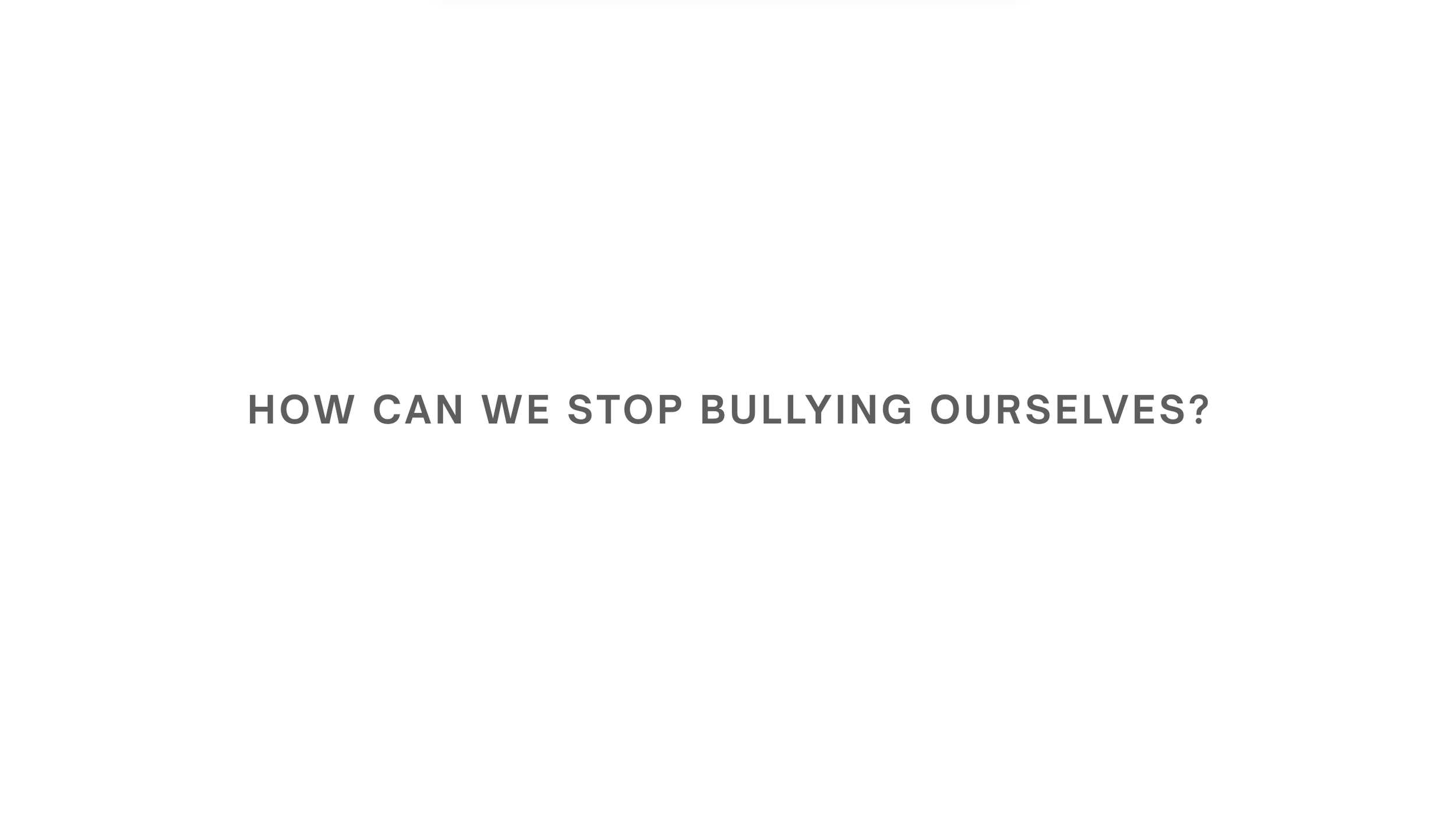
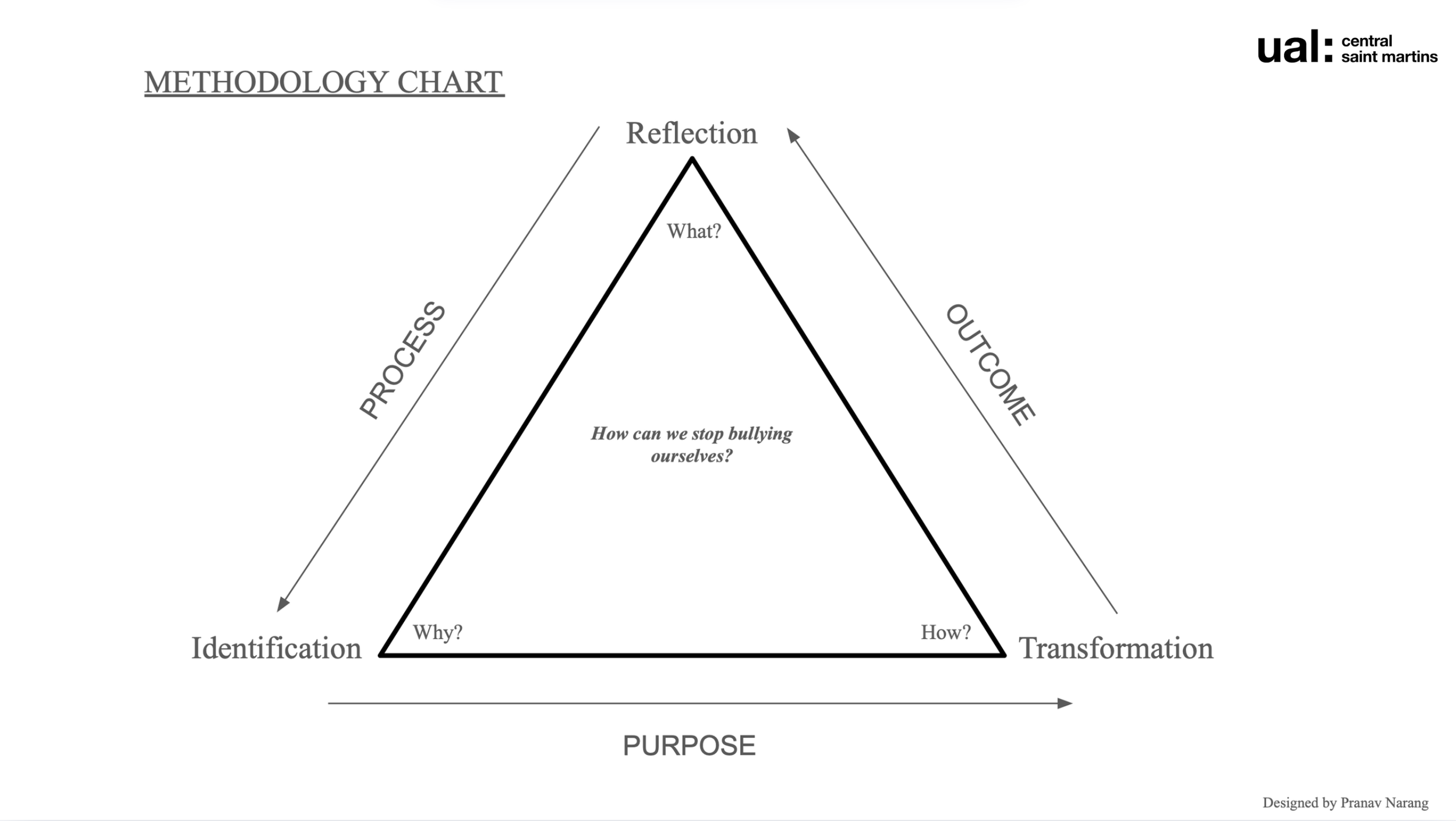
What a powerful statement. It immediately made me think about my research and the direction I have been steering. I felt quite lost within it after I realized the idea I had with the mirrors would not be the best way to engage with this project. So, I decided to reframe my question to, “How can we stop bullying ourselves?”
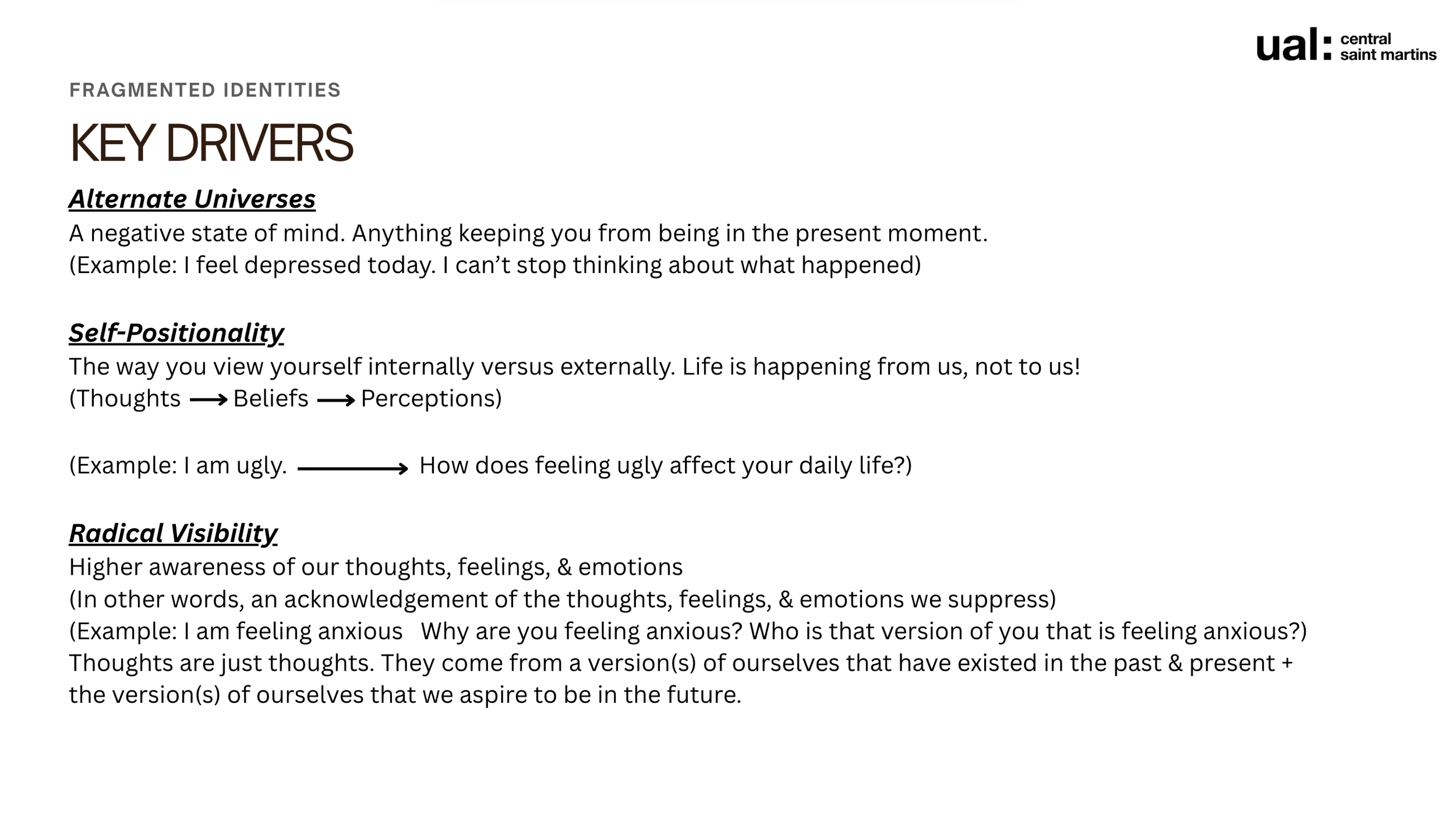
I think this question makes so much more sense to my project. I feel its safe to say that many of us suffer at times due to our inner critic, whether that be personally or professionally. Although the question has been reframed, the initial drivers of this project stay the same; self-positionality, alternative universes, and radical acceptance.
The workshop I curated was built on the idea of “Designing your own bully”. I met with an expert to gain further feedback prior to the workshop itself. I will have a separate blog entry to discuss the feedback I received from the expert psychologist.
Below, I have attached screenshots from the activities from the bullying workshop.
I think this workshop itself could have been designed better. I was fortunate to receive 7 participants, all students from CSM.
To begin, I gave a short presentation of the project and the underlying drivers that led me to my current research question. Afterwards, I had my participants take part in three separate activities.
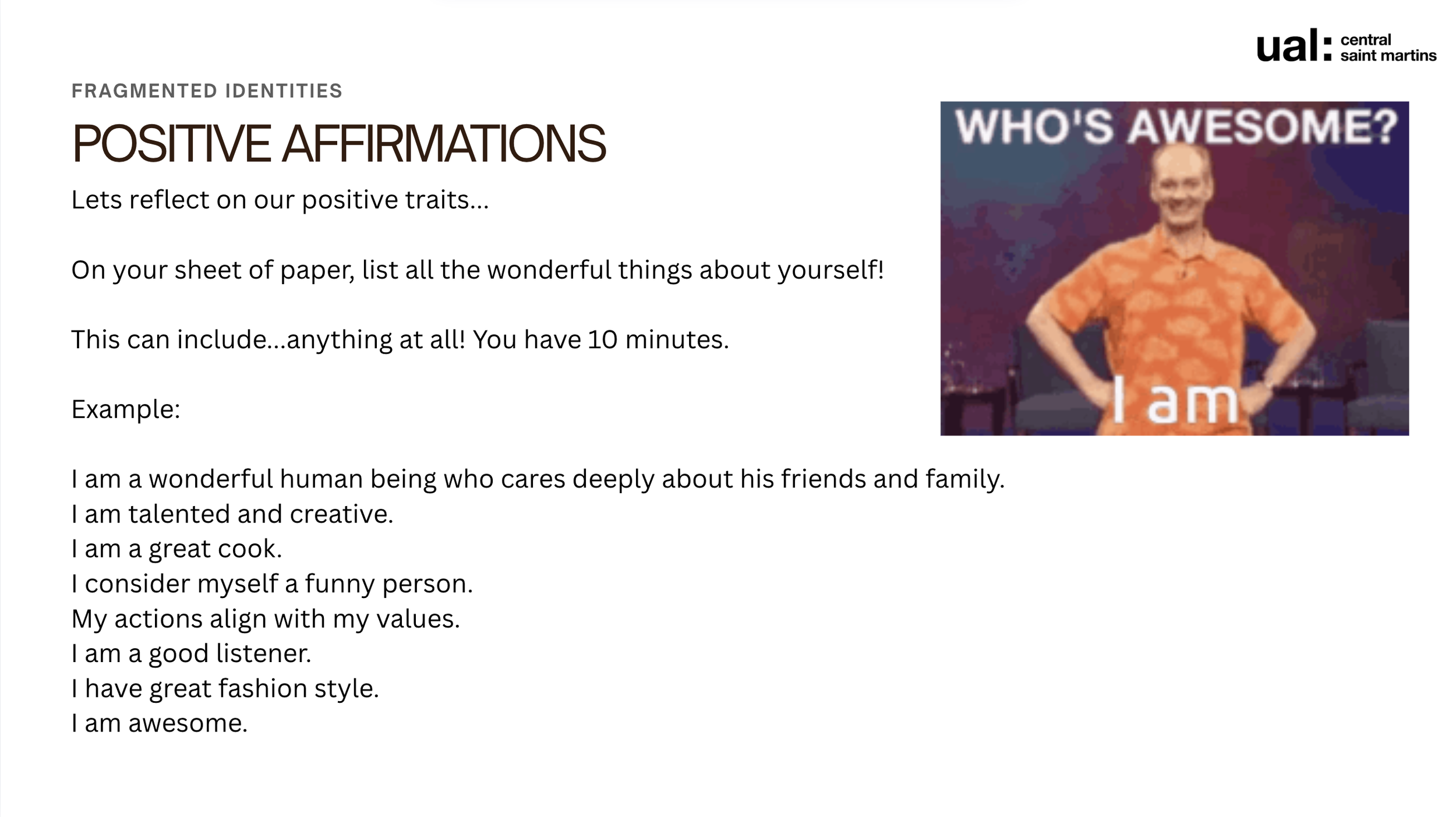
First Activity - writing positive affirmations about yourself
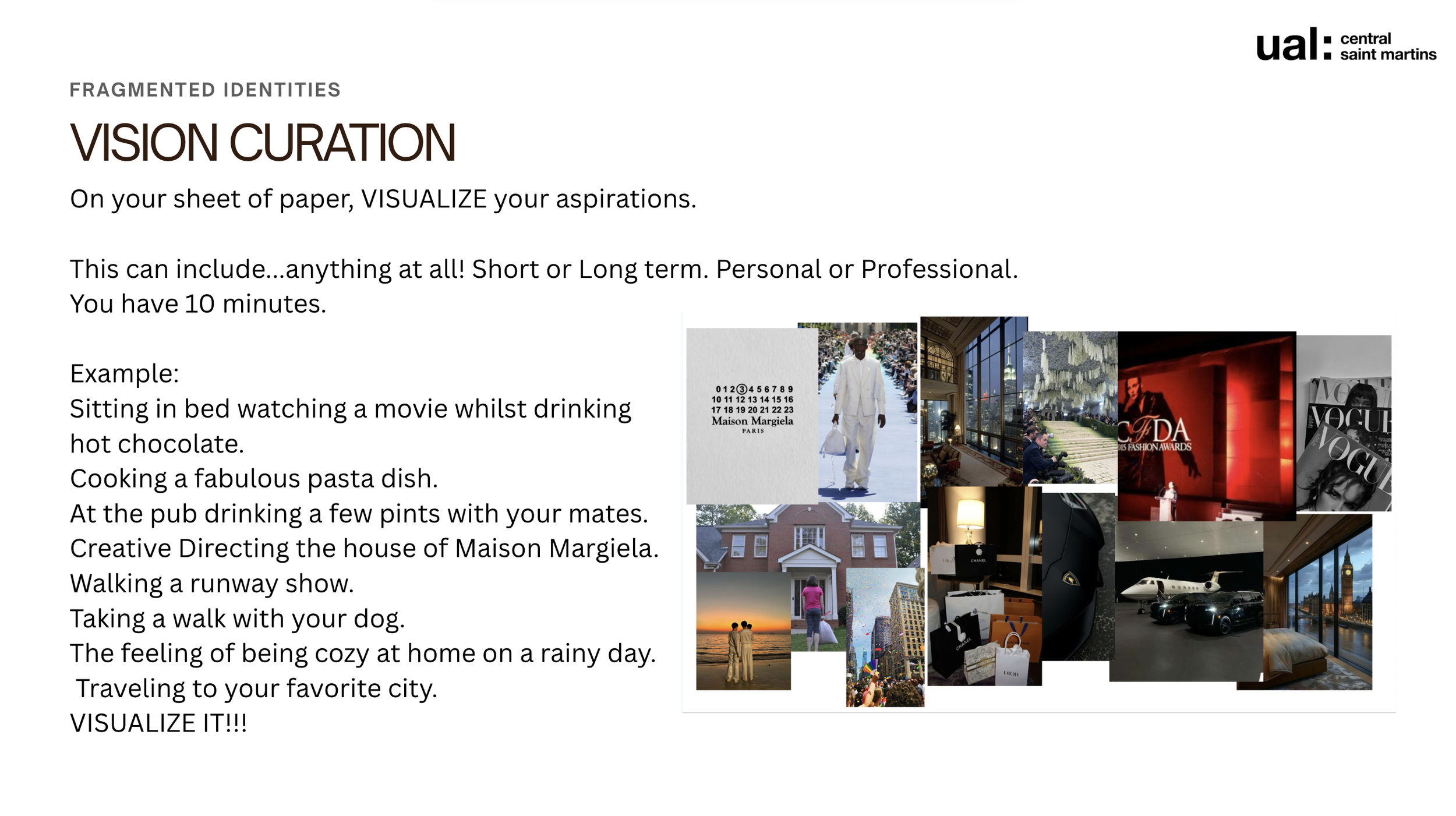
Second Activity - Vision board/writing or drawing your personal or professional aspirations (it could be as simple as drinking hot chocolate in your bed)
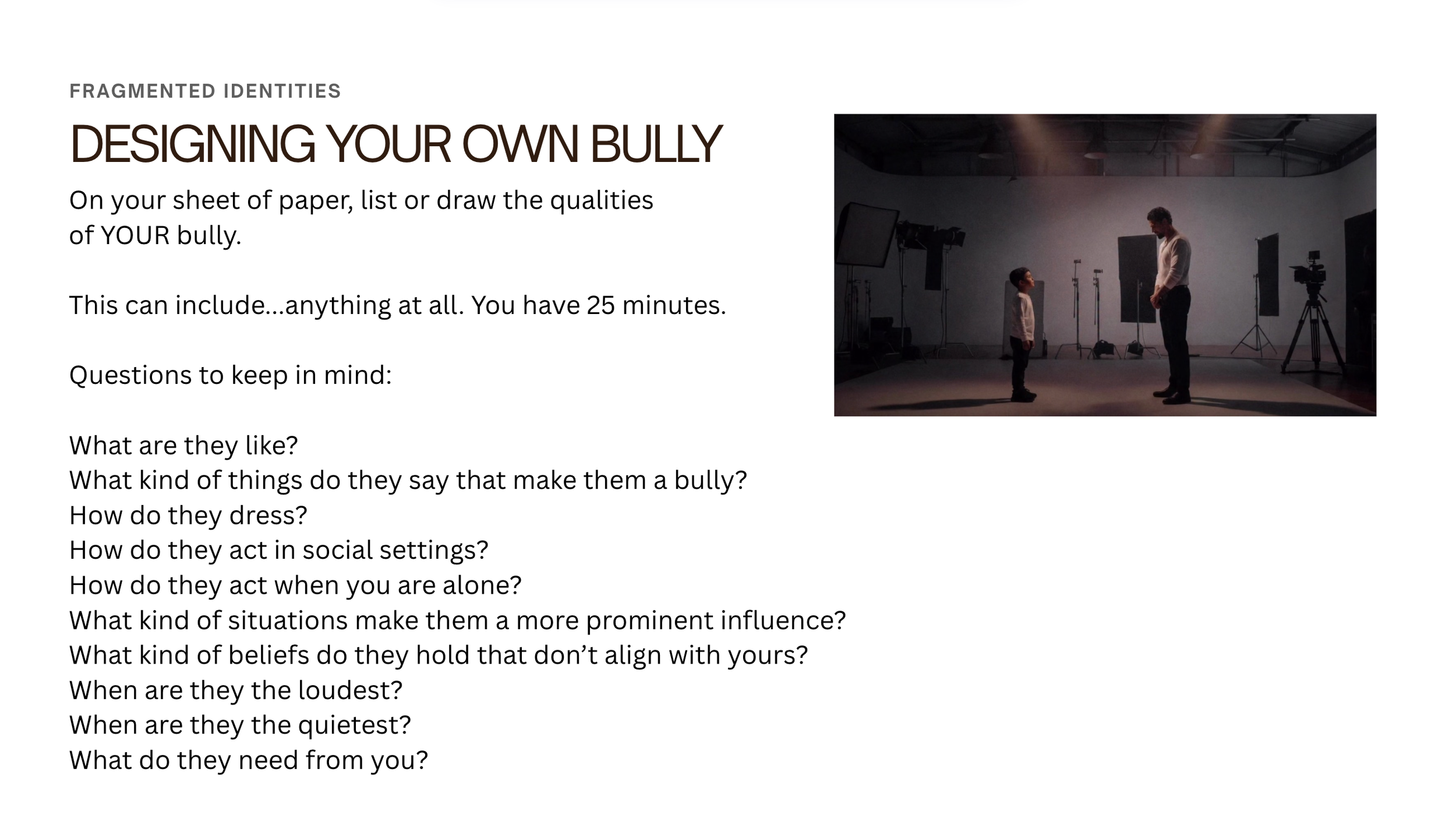
Third Activity - Designing your own bully
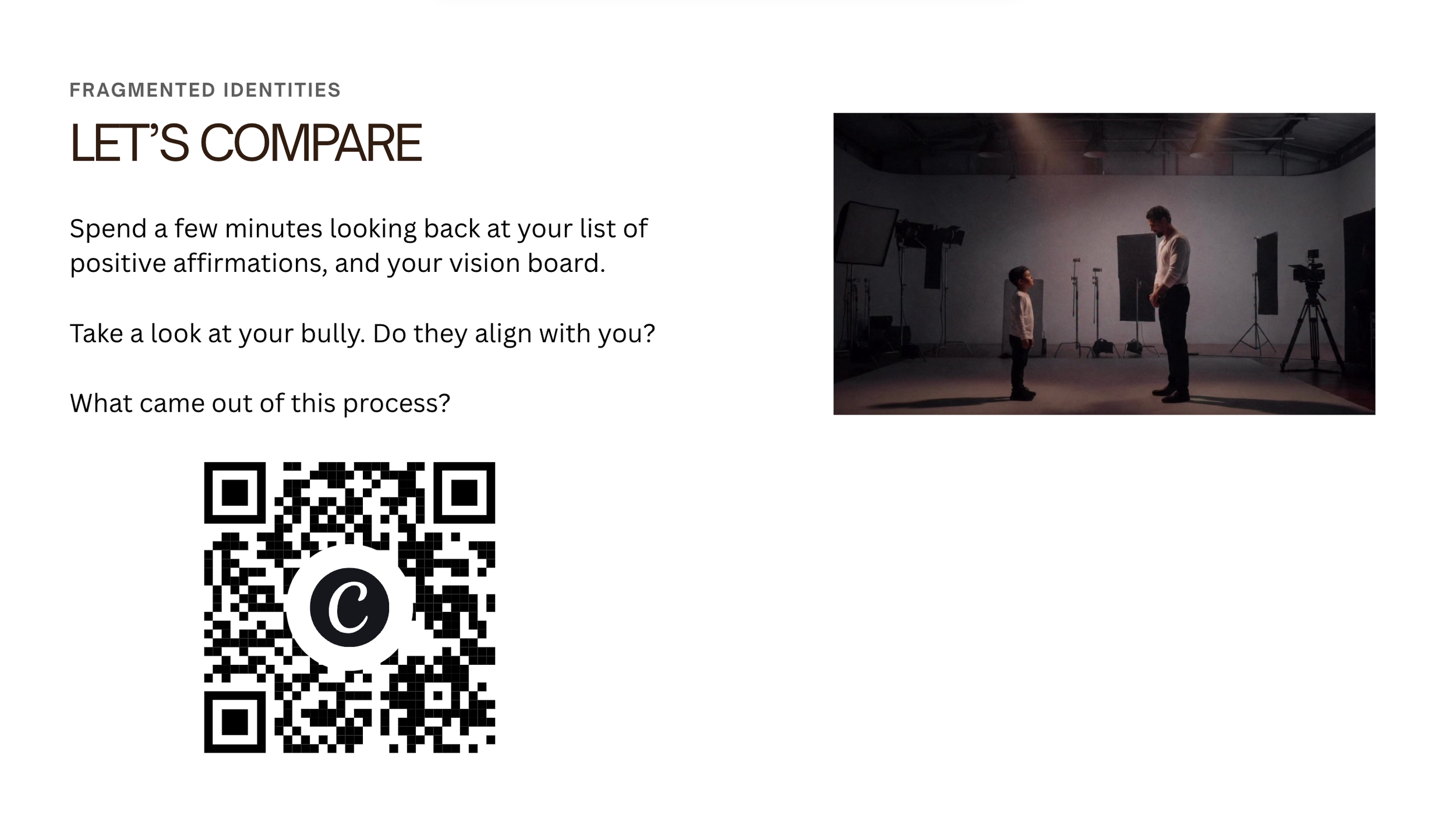
Fourth Activity - Comparison between the positive affirmations/vision board versus “your bully”
The initial activity was to start the workshop on a positive note. I think one thing many of us tend to forget is all the great characteristics that we already embody. For example, if 100 people told me that my outfit is great, but 1 person told me that its just awful - then naturally my mind would gravitate towards that one negative comment versus all the positive compliments. The same example can be applied to many different areas of our life, where we tend to focus on the negative even if there is more positive around us. I wanted my participants to reflect on themselves, especially since a bully is someone who puts someone else down, whether that be externally or internally. So, what are positive qualities about yourself? To built trust between myself and my participants, I provided personal examples that you can view below.
The second activity was curated to help my participants enter a process of visualization. One thing that my research taught me is that many people struggle with the process of visualization. To make this easier for my participants, I again provided examples to showcase the simplicity of the activity. It did not require my participants to think out of pocket, but the simple things that we aspire for whether that be personally or professionally. The examples I provided include drinking hot chocolate in bed whilst watching a movie, or professionally - creative directing the house of Maison Margiela (my personal goal).
The third activity was the part where we designed our own bully. Whilst designing the workshop, it became clear that designing your own bully was a difficult task to comprehend. How do you design your own bully? Or what tools do you use to design your own bully? Applying the process of visualization, I built a list of questions my participants could use for reference. For example, one of the questions asks, “how do they dress?” For me personally, I know the days I dress down may be one of those days when my inner critic is more so dominating my thoughts.
Overall, the workshop lasted around one hour, and the feedback was critical and excellent. After the end of the workshop, I invited my participants to engage in a reflective conversation of the overall experience of joining this workshop. The feedback ranged, and really helped me understand how to reconstruct my idea for my next workshop.
Many of the participants stated the format was “a bit weird to go from positive reflection to negative, especially since the workshop ended on the negative reflection.” This made me feel a bit guilty, as I did not want anyone to leave with negative thoughts lingering. But the feedback itself really helped me understand how to make this experience stronger.
Another participant stated, “When I think of design, I think of something positive that I would like to bring to this world.” The feedback was critical to my own understanding of the components involved in designing anything. Why would we want to design something that is completely negative in this world? I am still trying to figure out the way I can reframe that.
Below, I have added additional feedback provided submitted to the google form.
Participant One - “I thought it was really nice to sit down and think about this. It was interesting listing out the positive before the negative. I realised while listing out things about my bully - some qualities were things I actually want and see in other people but the rest were all values I don’t align with at all. I think it would be good to ask people to go deeper into this and make the connection between visualising what you want in the near future vs listing out the good and bad”
Participant Two - “Pranav you did very well with the workshop! Congratulations! The way you explained to us in the beginning was very clear and the idea of the research also related to many people! So keep going! The activity that we’re doing is also very nice yet challenging to recognize about our own feelings and emotions. Maybe a lil bit advice for your research is, to gain and collect more data for you as a researcher instead of providing the information and activities to the audience. I mean, it could be by asking more questions, or deep interview after the session with the participants. But this form is actually also very smart to collect data! Maybe also could be a measurement of how we feel before and after the workshop(?) Well anyway, you did very good! Congratulations!
Participant Three - “This experience was really informative for me personally, thank you for the space to explore these important aspects of myself. I think i would've preferred if there was less time devoted to the bully exercises, as that was a lot longer than the others. however that could be because i was uncomfortable with this section.”
Overall, this workshop was not the strongest, but it provided me great information on ways I can reconstruct the design of the workshop, along with my understanding of the way people respond to to confronting their own inner critic. I am definitely feeling more motivated in terms of my research, and excited to expand into unknown territories. While the feedback was both negative and positive, I am grateful that my participants felt comfortable enough to share constructive feedback on ways I can build a stronger impact.